
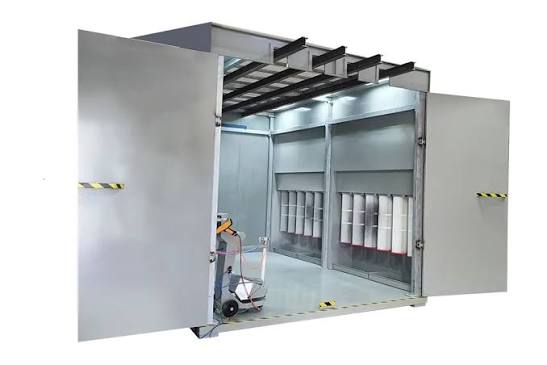
Opening a curing oven door does more than let a rack in or out. Heated air escapes, cooler shop air enters, and the oven has to recover before the next load reaches stable curing conditions. Understanding that recovery cycle helps manufacturers control energy use, cure consistency, and production timing without slowing the entire finishing line.
Door Size Changes How Much Heat Escapes During Loading
Large door openings make oversized parts easier to handle, but they also expose more of the oven interior to cooler surrounding air. Wider and taller openings can increase heat loss during loading, especially if operators leave the doors open while positioning carts, racks, or fabricated assemblies.
Careful sizing gives a business enough clearance for its largest regular load without creating unnecessary open area. A Reliant industrial powder coating oven can be matched to part dimensions and handling requirements so the doorway supports production without being much larger than the work passing through it.
Why Door-Open Time Matters as Much as Door Size
Long loading cycles can reduce oven temperature even when the doorway itself is appropriately sized. Employees who need several minutes to align racks, clear floor obstacles, or reposition heavy parts give more heated air time to escape before the doors close.
Efficient material handling shortens that exposure. A Reliant powder coating equipment package can help businesses coordinate racks, carts, booth access, and oven loading so coated parts move from the powder coating booth into the curing area with fewer pauses.
Fast transfers also protect uncured surfaces from accidental contact. Better workflow means the oven spends less time open, the heating system spends less time recovering, and the operation can maintain a steadier production rhythm throughout the shift.
Recovery Time Depends on the Load Entering the Oven
Cold steel absorbs heat immediately after entering the chamber, which means the oven must recover from both door-opening losses and the thermal demand of the new load. Thick weldments pull more energy from the chamber than light sheet-metal parts, so identical door cycles can produce very different recovery times.
Door Seals Play a Bigger Role Than They Appear To
Worn or damaged seals allow heat to leak continuously, even after the doors close. Small gaps around hinges, frames, or latching points can make Reliant powder coating ovens work harder to maintain temperature and may lengthen heating cycles over the course of a busy production day.
Regular inspection helps facilities catch hardened, torn, or poorly compressed seals before energy waste becomes routine. Reliant powder coating equipment can support an efficient finishing operation, but basic maintenance still determines how well the equipment holds the conditions it was designed to maintain.
Good door alignment matters too because a seal cannot work correctly if the panels do not close evenly. Proper latching protects temperature stability, reduces unnecessary burner cycling, and helps businesses keep curing schedules more predictable.
How Does Oven Recovery Affect Daily Throughput?
Recovery time becomes a production issue when the next batch cannot begin its effective cure cycle until conditions stabilize. Repeated delays of only a few minutes can add up across multiple loads, lowering the number of finished racks that leave the line by the end of a shift.
Pass-Through Designs Can Improve Material Flow
Pass-through ovens use doors at opposite ends so parts enter from one side and exit from the other. That arrangement can reduce backing, turning, and rack repositioning, which helps shops shorten door-open periods while keeping material moving in one direction through Reliant powder coating systems.
Straight-line movement can also make production easier to organize around preparation, spraying, curing, and cooling. Facilities considering a Reliant powder coating oven for sale should compare single-ended and pass-through layouts based on floor space, rack movement, batch frequency, and the time operators need to load each configuration.
Well-planned sequencing keeps unnecessary door cycles to a minimum. Grouping compatible loads and having the next rack ready before the oven opens allows manufacturers to make better use of heating capacity instead of spending production time waiting on material.
Controls and Heating Capacity Determine How Quickly Temperature Returns
Burner output, circulation airflow, insulation, chamber volume, and control response all influence recovery after the doors close. Reliant powder curing ovens need enough heating capacity for the expected combination of door losses and incoming thermal load, especially where heavy parts cycle through repeatedly.
Match Door Design to the Business’s Actual Production Pattern
Production data gives manufacturers the best basis for deciding how large an oven opening should be and how frequently it will operate. Buyers should consider maximum part width and height, rack dimensions, load weight, daily batch count, opening duration, and expected future growth rather than selecting a doorway from the largest one-time project.
For manufacturers looking to reduce heat loss during loading, Reliant Finishing Systems can provide powder coating oven configurations that account for door size, part movement, and recovery demands, helping keep cure cycles steady and production on schedule.