
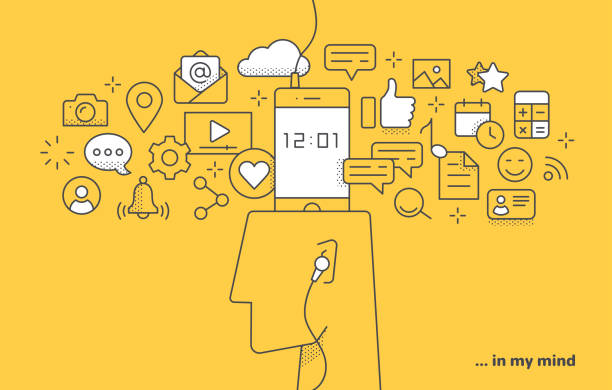
What digital habits are reshaping attention spans
It’s kind of scary how hard it’s become to focus on one thing. I’ll open a video to relax and somehow end up switching apps three times before the video even finishes. That’s exactly why digital habits are reshaping attention spans in ways we don’t fully notice yet. It’s not that our brains suddenly got lazy. It’s that our daily tech behavior trained them to expect constant stimulation.
Scrolling without stopping
Endless scrolling is probably the biggest culprit. There’s no natural end point. No signal to stop. Your brain stays in hunting mode, always expecting the next interesting thing.
Platforms reward quick reactions, not deep thinking. You scroll past entire ideas in seconds. Over time, your brain adapts to speed, not depth.
I’ve caught myself getting bored halfway through things I actually like. That didn’t happen years ago.
Short videos changing how we consume everything
Short-form videos rewired patience. When content jumps every few seconds, the brain learns to crave fast payoff.
Long videos start feeling slow. Articles feel heavy. Even conversations feel like they take too long to get to the point.
Digital habits are reshaping attention spans by making instant reward the default expectation.
Constant notifications fragment focus
Notifications don’t just interrupt your attention. They train it to stay shallow.
Even when notifications are off, the brain expects interruption. That anticipation alone reduces focus.
I’ve noticed that even during quiet moments, part of my brain waits for a buzz. That background alertness drains attention without us realizing it.
Multitasking becomes the norm
Watching something while texting. Working while checking social media. Listening while replying to emails.
We call it multitasking, but it’s actually task-switching. And task-switching damages concentration.
Your brain never fully settles. It keeps jumping, which feels productive but leaves you mentally exhausted.
Information overload numbs curiosity
There’s too much content. Too many opinions. Too many updates.
When information becomes unlimited, attention becomes selective in the wrong way. We skim instead of explore. We glance instead of understand.
Depth feels optional now.
And when depth disappears, attention span follows.
Algorithms train impatience
Algorithms decide what you see next. If something doesn’t grab you immediately, it disappears.
This teaches the brain that boredom should be avoided instantly.
So the moment something slows down, attention drops.
We don’t sit with discomfort anymore. We swipe it away.
Reading habits are quietly changing
Reading used to be immersive. Now it’s fragmented.
We jump between tabs. Skim paragraphs. Skip parts that don’t hook us instantly.
Even when reading long content, the urge to check something else stays present.
Digital habits are reshaping attention spans by making full immersion feel rare.
Why silence feels uncomfortable now
Quiet moments feel empty.
Waiting feels awkward.
So we fill every gap with screens.
Those gaps were where attention recovered. Where thoughts settled.
Without them, focus never resets properly.
Work culture reinforces the damage
Fast replies are praised. Availability is expected. Deep work is rarely protected.
Attention becomes reactive instead of intentional.
We respond more than we think.
That constant reaction mode weakens sustained focus.
Social media rewards distraction
Likes, shares, comments. Quick feedback loops.
They teach the brain to seek validation in small bursts.
Long-term effort feels less rewarding compared to instant digital feedback.
Attention adapts accordingly.
Why digital habits are reshaping attention spans long-term
Because habits shape brain wiring.
What we repeat becomes automatic.
Attention isn’t disappearing. It’s being retrained.
The brain still focuses deeply, but only when something fights hard for it.
Rebuilding attention isn’t about quitting tech
It’s about changing how we use it.
Slowing consumption. Creating friction. Letting boredom exist again.
Attention needs space, not stimulation.
And right now, space is the rarest thing in the digital world.
Until we protect it, our focus will keep shrinking quietly.