
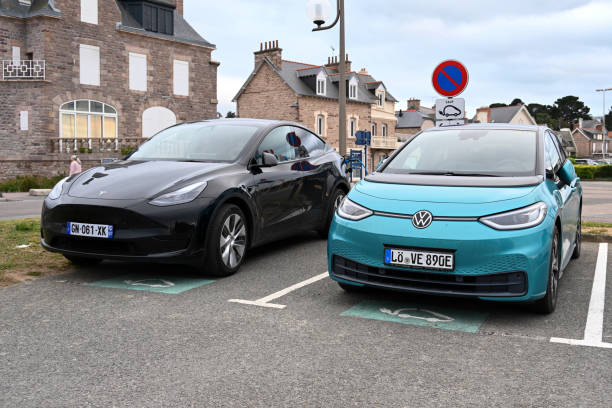
Volkswagen achieved a major breakthrough in 2025 by becoming Europe’s best-selling electric vehicle brand. The company sold 274,278 electric vehicles, marking a strong 56 percent year-on-year increase. As a result, Volkswagen moved ahead of Tesla, whose European registrations dropped by nearly 27 percent during the same period. This shift highlights a changing balance of power in Europe’s fast-growing EV market.
Strong Sales Reflect Volkswagen’s European Strategy
To begin with, Volkswagen benefited from a strategy built specifically for European consumers. The brand offered a wide EV portfolio, including affordable compact cars and family-friendly models. Moreover, Volkswagen priced its vehicles competitively while maintaining brand trust. Consequently, buyers found its EVs practical, familiar, and accessible, which directly boosted registrations across major European markets.
Tesla Loses Momentum in a Competitive Market
At the same time, Tesla struggled to maintain its earlier dominance. Although the brand remained influential, its limited model range and pricing challenges reduced appeal. In addition, increased competition from European and Asian manufacturers gave buyers more choices. Therefore, Tesla’s registrations declined even as the overall EV market expanded. This contrast made Volkswagen’s rise even more significant.
Europe’s EV Market Continues Rapid Expansion
Meanwhile, the broader European EV market continued to grow at a rapid pace. Fully electric car registrations increased by approximately 29 percent in 2025. As charging infrastructure expanded and battery performance improved, more consumers embraced electric mobility. Moreover, stricter emissions regulations encouraged buyers to move away from combustion engines. Thus, rising demand created opportunities for brands that adapted quickly.
Local Manufacturing and Policy Support Drive Success
Furthermore, Volkswagen benefited from its deep manufacturing presence in Europe. Because the company operates production plants across the region, it reduced supply delays and logistics costs. In addition, government incentives and subsidies across Europe supported EV purchases. As a result, Volkswagen aligned perfectly with policy goals while meeting consumer expectations, which strengthened its competitive position.
European Brands Reclaim Market Leadership
More importantly, Volkswagen’s success signals a broader shift toward European incumbents. For years, U.S.-based brands led the EV conversation. However, European automakers now combine scale, technology, and regulatory alignment more effectively. Consequently, local brands regained market leadership by offering vehicles tailored to regional needs and compliance standards.
Innovation and Trust Shape Consumer Choice
At the same time, consumer trust played a key role. Volkswagen invested heavily in improving software, battery efficiency, and safety features. Moreover, long-established dealer networks reassured buyers about service and maintenance. Therefore, customers viewed Volkswagen EVs as reliable long-term investments rather than experimental technology.
Why This Shift Truly Matters
In conclusion, Volkswagen overtaking Tesla represents more than a sales milestone. It marks a turning point in Europe’s EV landscape, where strong regional players now lead the transition. Despite intense global competition, European manufacturers demonstrated adaptability and scale. Ultimately, this shift confirms that Europe no longer follows the EV revolution—it actively shapes it.